Dermatologicals
Health of the skin and its appendages: dermatological products for topical use
PRODUCTS
The skin and its appendages constitute the integumentary system, the organ that covers the entire body surface and is an essential anatomical and physiological barrier between the external and internal environment. It also reflects the animal’s state of health and the good functioning of the organism.
For this reason, every owner should always pay attention to the hygiene and care of their pet’s skin and coat, using appropriate products according to circumstances.
Structure of the skin and its appendages
The skin of dogs is between 0.5 and 5 mm thick, while the skin of cats is thinner, from 0.4 to 2 mm. Anatomically, it has two layers: the epidermis and the dermis.
The epidermis is the most superficial layer and consists of epithelial cells called keratinocytes organised in continuous layers. The keratinocytes originate from the deepest layer of the epidermis (stratum basale) and, through a process of differentiation and maturation, progressively ascend to the outermost layer (stratum corneum).
As new keratinocytes reach the stratum corneum, those present tend to detach and be eliminated: this process, called exfoliation, ensures a continuous renewal of the epidermis as well as the removal of any micro-organisms that, having come into contact with the skin, could cause infections. Intercellular spaces are filled with lipids, i.e. fats, in the form of lamellae that act as a glue between cells and help maintain the integrity of the skin barrier.
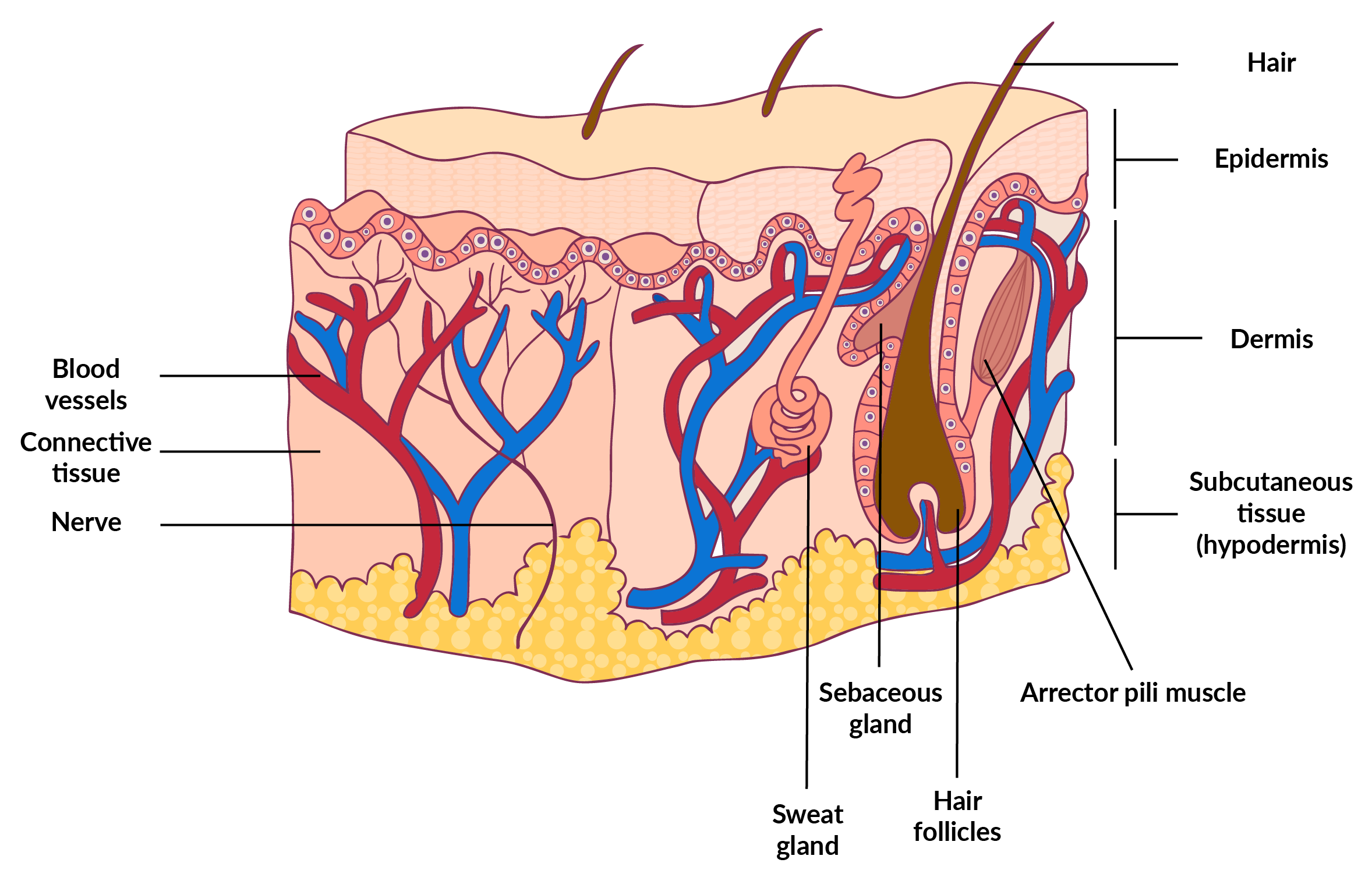
The dermis is a supportive, compressible and elastic connective tissue that supports the epidermis on the surface and the hair follicles and sebaceous glands in depth. It is a very dense tissue containing collagen, elastic and reticular fibres, the intercellular matrix, blood and lymphatic vessels, nerves, muscles and different types of cells.
Skin appendages are hair follicles, sebaceous and sweat glands and nails.
Below the dermis is the subcutaneous tissue, consisting of connective tissue rich in adipocytes (fat tissue cells). It has multiple functions, including storing lipids and fat-soluble substances, thermal insulation and protection against trauma.
Functions of the skin and its appendages
The skin and its appendages perform many important functions for the body:
-
mechanical protection: they are the main protective barrier against mechanical trauma
-
protection against water: even if the skin surface is wet, water cannot penetrate deep into the skin because the intercellular spaces of the stratum corneum are filled with lipids that are impermeable to water and water-soluble substances
-
photoprotection against visible light and ultraviolet (UV) rays
-
thermal homeostasis: protection against excessive cold and/or heat
-
biochemical homeostasis: many substances essential for the body are stored in the dermis and subcutaneous adipose tissue
-
metabolic and immunological functions: essential metabolic activities occur in the skin; the skin's immune system also plays a crucial role in immunological defences against micro-organisms, allergens and parasites
-
sensory functions: different sensations (pain, itching, heat, cold, pressure, etc.) are mediated by nerve endings in the epidermis
-
social functions: certain specialised glands, e.g. the perianal glands, secrete pheromones used to mark the territory, for individual recognition and sexual attraction.
The skin barrier
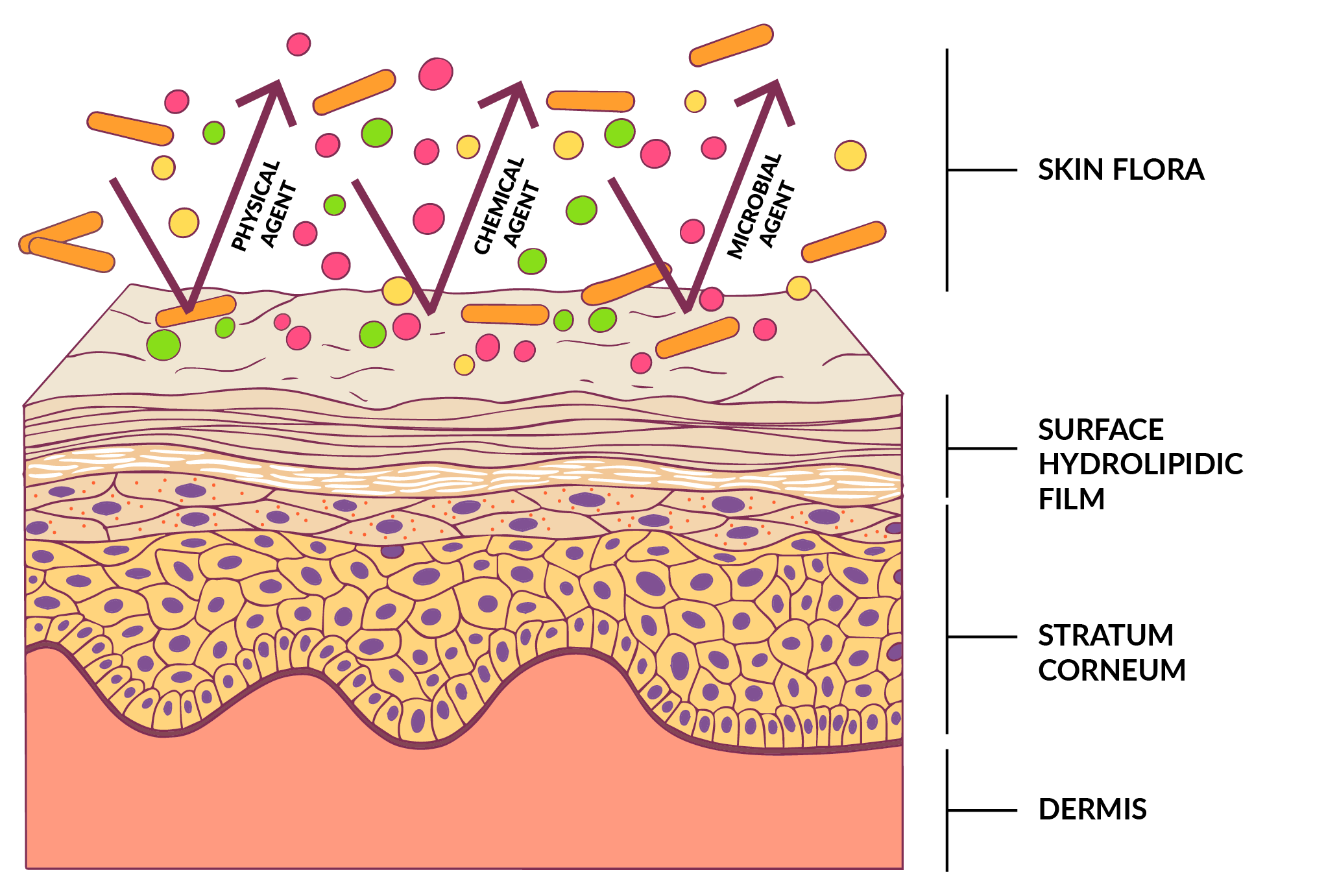
The skin is a physical, chemical and microbiological protective barrier against external aggressions, in particular thanks to the role played by the surface hydrolipidic film, the stratum corneum and the dermis.
In addition, a flora consisting mainly of bacteria and fungi physiologically resides on the skin surface.
This skin microenvironment is dynamic and subject to constant changes. Numerous factors can influence the complex skin ecosystem:
- environmental factors (temperature, humidity, skin hydration)
- host-dependent factors (skin structure, anatomical location, glandular secretions, skin pH, predisposing diseases)
- microbial factors (virulence factors of the microbial agent).
Dogs frequently present skin infections due to altered local defences.
With a good knowledge of what a healthy skin flora looks like and the factors that regulate its growth, it is possible to better understand the pathogenesis and identify the therapy of many pathological processes.
Superficial dermatitis
The term ‘dermatitis’ indicates various skin diseases, mostly characterised by inflammatory phenomena. In its broadest sense, dermatitis is a rather common and generic disorder and, as such, it has multiple causes (infections, irritations, allergic reactions, food deficiencies or excesses, etc.).
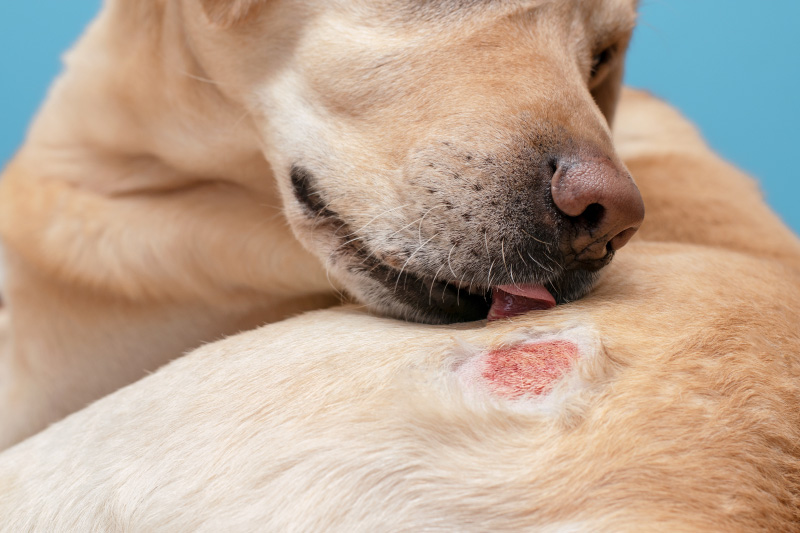
Superficial dermatitis (intertrigo, impetigo, folliculitis, bacterial overgrowth syndrome) is an inflammatory process affecting the epidermis and/or hair follicles, without the infectious process extending to the dermis.
The most frequent forms are due to bacterial infections (pyoderma), mainly caused by Staphylococcus intermedius.
The therapy of these diseases is based on substances that eliminate the microbial agents or inhibit their growth and can be administered to the animal by mouth or topically.
Topical therapy
All forms of superficial dermatitis lend themselves to topical treatment, both because they are caused by microbial overgrowth on the skin’s surface, without colonisation of the deeper layers, and because they tend to be localised.
Topical therapy is particularly useful and effective in treating superficial pyoderma. However, it should be prescribed with as much care as possible.
For greater effectiveness, it is advisable, and sometimes necessary, to shave the animal. Various formulations are used: shampoos, foams, gels, creams.
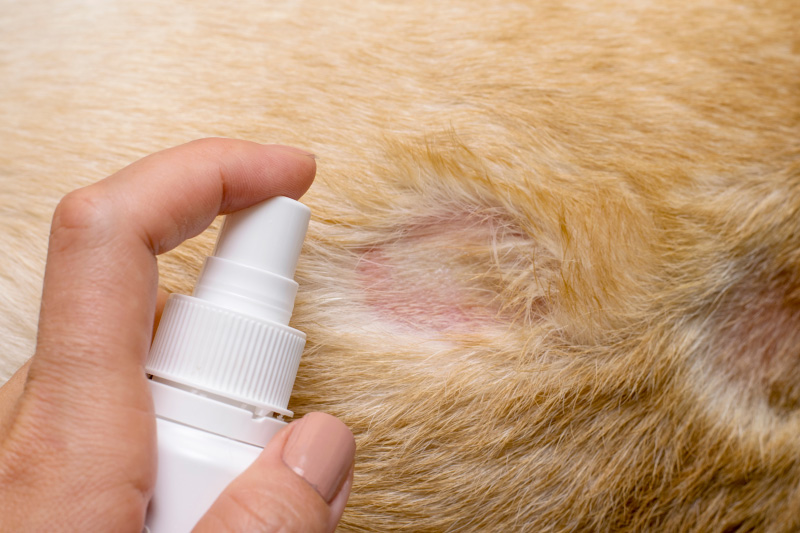
The active ingredients used in these products can be antiseptics, antibiotics and antifungals. In order to obtain tangible results, however, it is necessary to comply with the specific methods of use, dosage and frequency of application of the chosen product, which depend on the formulation and the active ingredients it contains.
Topical antiseptics
Antiseptic active ingredients for topical use include Chlorhexidine, Benzoyl Peroxide, Iodine derivatives, Ethyl Lactate and Triclosan.
Chlorhexidine is an antiseptic with a broad spectrum of activity. It is effective against most bacterial species and against dermatophytes and yeasts (particularly of the genus Malassezia). Different formulations of products containing Chlorhexidine in varying concentrations are available on the market. Side effects (rash, itching, skin irritation) are infrequent and tend to disappear after treatment is discontinued.
Benzoyl Peroxide has antibacterial properties, as well as keratolytic, anti-itch and antiseborrhoeic properties.
Among Iodine derivatives, the most commonly used is Iodopovidone, which has a bactericidal and fungicidal effect.
Ethyl Lactate has bacteriostatic and bactericidal properties: through bacterial lipases, it is hydrolysed into ethanol and lactic acid; the lactic acid causes a decrease in skin pH, thus inhibiting bacterial growth and proliferation. Ethanol also decreases sebaceous secretion, so Ethyl Lactate also has a modest antiseborrhoeic action.
Substances that help skin repair
Antiseptic active ingredients are often combined with other substances with anti-inflammatory, antioxidant and wound-healing propertiesthat promote faster skin repair.
These include Allantoin, which has soothing and healing topical properties due to both its gentle keratolytic action, which promotes the removal of dead cells, and its ability to stimulate the formation of granulation tissue and thus the healing of sores and wounds.
Bisabolol, a natural active ingredient contained in chamomile essential oil, is also characterised by decongestant and anti-inflammatory properties.
Other molecules used for wound-healing purposes are, for example, Malic Acid, Mandelic Acid, and Zinc Oxide.

In summary, the skin and skin appendages are an essential protective barrier against harmful external agents. For this reason, any alteration to this organ risks compromising the health of the entire organism. It is therefore crucial, when the first signs of disease are observed, to intervene quickly with a treatment protocol based on the causative aetiological agent.
Topical therapy is widely used in veterinary dermatology, either alone as the sole therapeutic treatment or in combination with other therapies. However, in order for a topical therapy to be effective and produce significant results, it must be carried out correctly, respecting the specific methods of use, doses and frequency of administration of the product used.