Urinary acidifiers
Urinary acidifiers: why are they used in case of struvite stones?
PRODUCTS
The presence of struvite stones in the urinary tract is a frequently encountered clinical condition in both dogs and cats.
The medical dissolution of struvite stones involves a multimodal therapy that includes the use of urinary acidifiers, correction of any predisposing causes (e.g. dietary, anatomical, etc.), pain management and antibiotic treatment in case of concomitant urinary tract infection.
How do struvite stones form?
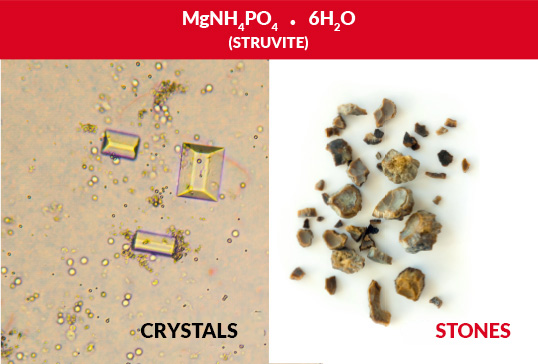
Struvite stones are made of ammonium magnesium phosphate hexahydrate and are formed when the urinary concentration of magnesium, ammonium and phosphate ions increases simultaneously with a rise in urine pH (pH > 6.5).
In addition to an alkaline urinary environment, several other factors predispose to struvite stone formation: lower urinary tract infections (especially in dogs), dietary factors, genetics, etc.
Why is it necessary to acidify urine to solve the problem of struvite stones?
The pH of the urine has a marked influence on the solubility of struvite crystals: an acidification of the urine increases their solubility, thus reducing the risk of stone formation.
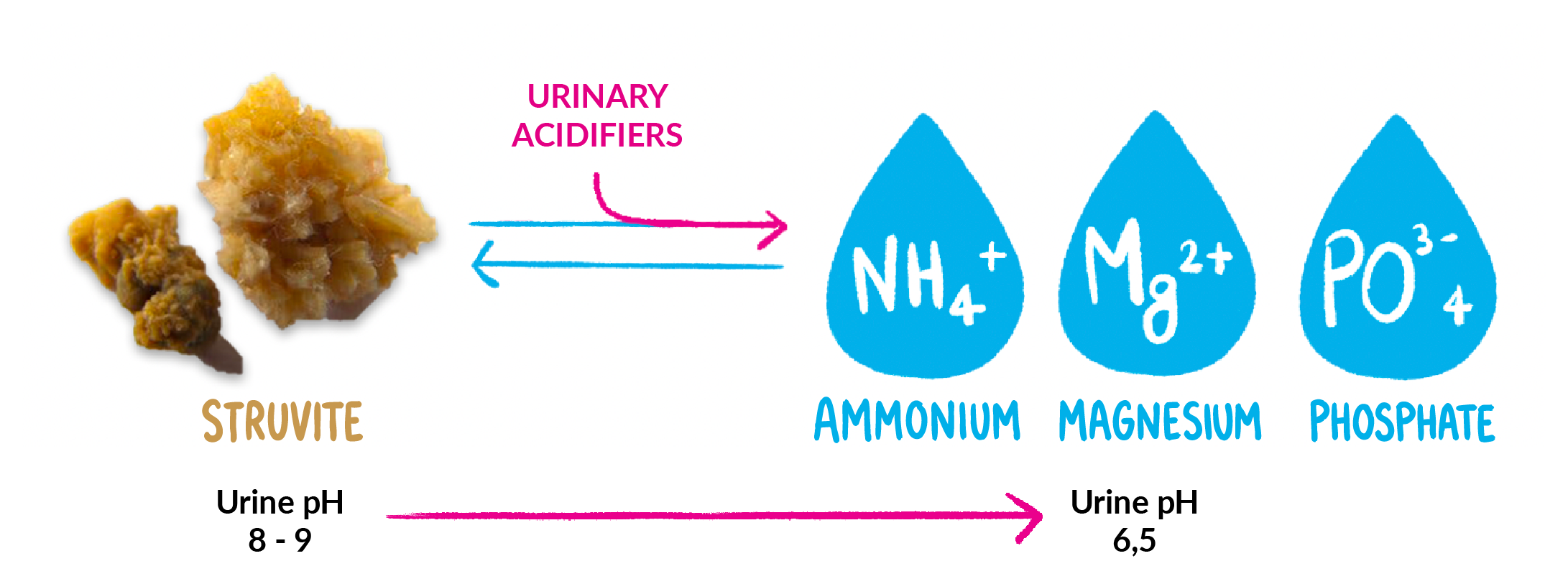
Acidifying the urine is, therefore, a very important factor in the therapeutic management of struvite stones; suffice it to say that when the urinary pH drops even by just one unit, the ionic balance changes to the point that the solubility of struvite increases by 17 times. As , the use of urinary acidifiers is essential for the complete resolution of the problem.
How to acidify urine
There are currently several active ingredients available on the market for acidifying urine and which can be used individually or in combination with each other.
These include methionine and ammonium chloride.
Methionine is particularly useful as, in addition to its urinary acidifying effect, it also counteracts the formation of new struvite stones through a complex biochemical mechanism and, eventually, it also promotes the elimination of metabolites with antiseptic action in the urine.
Ammonium chloride, in addition to having a urinary acidifying effect, also causes an increase in diuresis, which is especially useful during struvite cystitis.
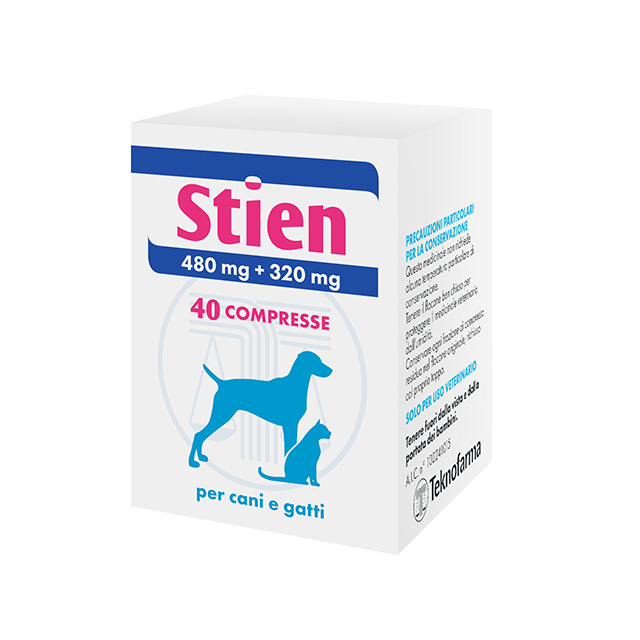
These two active ingredients can also be used in combination with each other with significant advantages. Therefore, compared to using them individually, the combination of methionine and ammonium chloride makes it possible to:
-
enhance the activities of the two active ingredients and thus reduce unit quantities
-
obtain a quicker and more effective acidification of the urine pH
-
maintain the urine pH stable over time
-
avoid the risk of dangerous fluctuations with alkaline peaks that might lead to pH values higher than those measured before treatment.
Other less commonly used substances with a urinary acidifying effect are, for instance, vitamin C, phosphoric acid, and cranberry.
Recommendations for the use of urinary acidifiers
Urinary acidifiers should be administered to the pets during or immediately after the main meals, in order to mitigate the effects of the postprandial alkaline tide. By doing so, the urinary pH can be stabilised below 6.5 and abrupt fluctuations during the day can be avoided.
Throughout the period of the acidification therapy, the animal’s owner must ensure that the animal always has water available, as the therapy might increase its intake.
Finally, it is extremely important to monitor the urinary pH in order to avoid over- or under-acidificationto prevent both excessive and insufficient acidification and to carry out periodic urine tests with your treating veterinarian.
In summary, in order to achieve complete dissolution of struvite stones and reduce relapses in dogs and cats, it is essential to intervene on urinary pH. Since alkaline urinary pH is one of the main predisposing factors for struvite formation, urine acidification is a key element for the resolution of this condition.
For the correct therapeutic management of struvite urolithiasis, it is essential to consult your veterinarian.