Otologicals
Medicinal products for otological use: why to use them
PRODUCTS
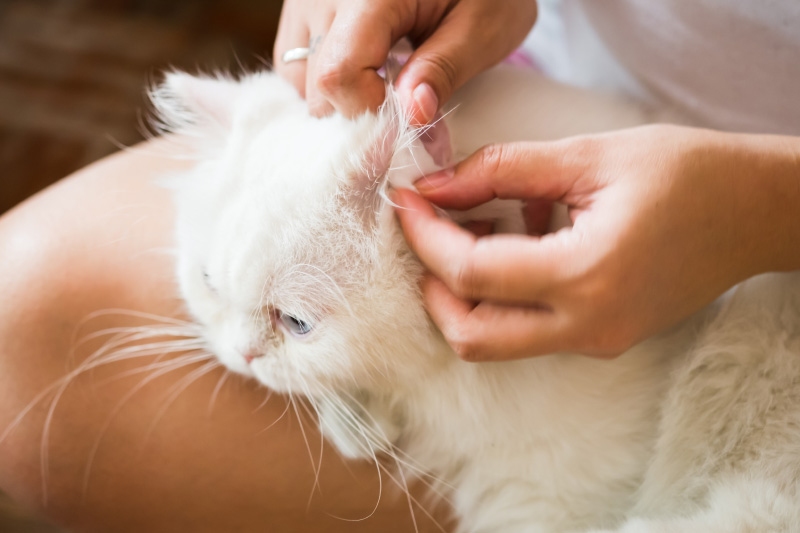
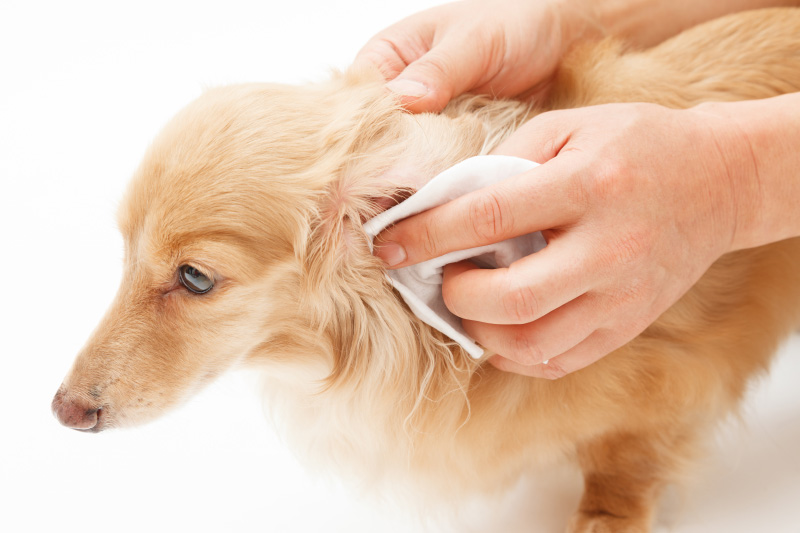
Dogs and cats can frequently suffer from inflammatory and infectious processes in the outer ear. Proper hygiene and cleaning of the ear and the identification and removal of any predisposing factors help to keep the ear healthy and reduce the risk of otitis.
Anatomy of the ear
The ear of dogs and cats can be divided into three anatomical parts:
- outer ear
- middle ear
- inner ear.
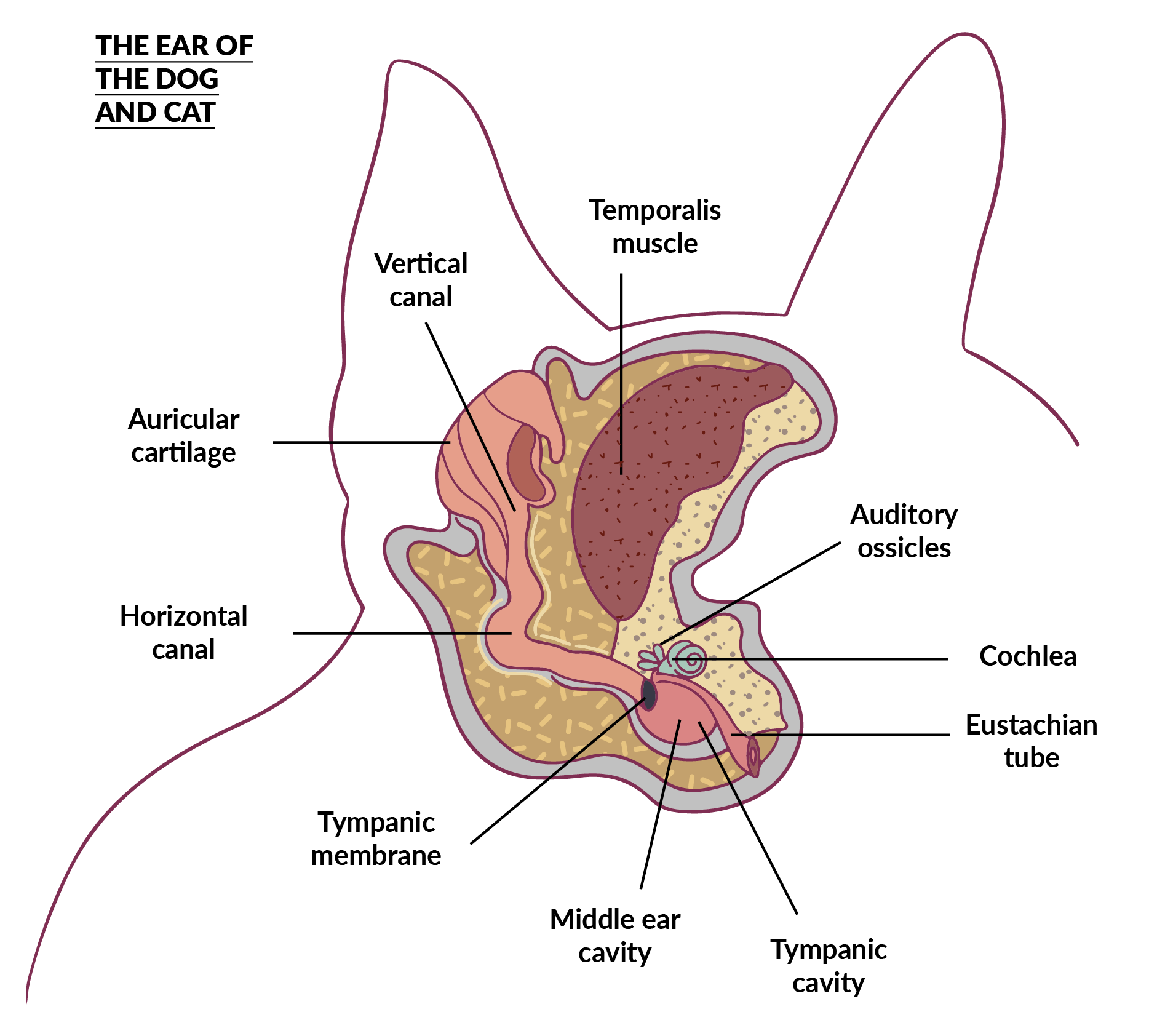
The outer ear consists of the auricle and ear canal and its function is to convey sound waves to the eardrum. The auricle consists of an auricular cartilage that gives it rigidity, and the skin that covers it.
The ear canal consists of the auricular and annular cartilages and the skin that covers them and is divided into two portions: vertical and horizontal.
In dogs, the anatomical conformation of the outer ear can be quite variable depending on breed and size. This variability, especially with regard to the length and diameter of the ear canal, plays a key role in susceptibility to ear diseases. The skin lining the auricle and ear canal contains numerous sebaceous and ceruminous glands and hair follicles. The skin exfoliation and the glandular secretions that flow into the lumen of the ear canal build the earwax.
A healthy ear canal normally contains a microbial flora consisting mainly of Gram+ bacteria (mainly staphylococci) and mycetes (Malassezia pachidermatis and Candida albicans).
The middle ear contains the three ossicles (hammer, anvil and stirrup) that transmit sound vibrations from the eardrum to the inner ear and therefore acts as a sound amplifier.
The inner ear consists of a complex series of fluid-filled ducts and sacs and is responsible for maintaining the balance. Here, sound waves are converted into electrical impulses and sent to the brain.
All three portions of the ear can be affected by inflammatory conditions called otitis. Otitis is classified as external, medium or internal depending on the anatomical portion of the ear affected.
Otitis externa
The term otitis externa is used to define an inflammatory process that can affect the auricle, ear canal and eardrum.
When the inflammation also involves the tympanic bulla, we speak of otitis media. This is usually caused by the chronicization of a bacterial otitis externa, with subsequent spread of the bacteria through the rupture of the eardrum.
Otitis internal is a severe inflammatory process involving the inner ear, which is responsible not only for sound transmission, but also for balance. For this reason, the main observable clinical symptoms are loss of balance and altered perception of space.
In the case of otitis externa, inflammation is accompanied by oedema and production of exudate. The glands in the ear canal increase their secretions and consequently the amount of earwax produced increases. As a result, the ear becomes a favourable environment for the multiplication of pathogenic microorganisms. In general, the number of bacteria with Gram- predominance, in particular Pseudomonas spp. and Malassezia pachydermatis increases.
Otitis may be acute or chronic, persistent or relapsing, unilateral or bilateral. During chronic otitis externa, a series of progressive pathological changes occur, including varying degrees of glandular hyperplasia and ectasia, fibrosis and calcification of the ear canal.
Predisposing, primary, secondary and perpetuating causes
In cases of otitis externa, the triggering event may be a single causal agent or the result of several coexisting factors.
Griffin’s aetiological classification scheme divides the causes of otitis externa into:
Predisposing factors, i.e. those conditions that increase the risk of developing otitis externa:
- particular anatomical conformation of the auricle
- climate factors affecting the temperature and humidity in the ear canal
- excessive amount of hair in the ear canal
- obstructive pathologies.
Primary causes, i.e. all conditions that can cause otitis externa by themselves:
- parasites (e.g. mites)
- allergic diseases (e.g. atopy)
- primary keratinisation defects or secondary to endocrinopathies
- foreign bodies (e.g. grass awns)
- glandular disorders
- autoimmune diseases.
Secondary causes, i.e. factors that can cause otitis in the presence of one or more predisposing factors or in an ear that already has abnormalities:
- bacteria (e.g. S. intermedius, Pseudomonas spp., etc.)
- yeasts (e.g. overgrowth of M. pachydermatis)
- irritative contact reactions (e.g. topical application of medicinal preparations).
Perpetuating factors, i.e. those conditions that hinder healing and result in chronic otitis:
- pathological changes in the ear canal (e.g. oedema, fibrosis, hyperplasia of glands, etc.)
- alterations of the eardrum
- otitis media.
Clinical approach and diagnosis
A correct approach to otitis externa involves taking an accurate general and dermatological history. The diagnostic procedure includes a clinical examination with a general physical examination of the animal and a complete ear examination, including visual inspection, palpation of the ear canal and otoscopic examination. Cytological examination of the exudate and a culture with antibiogram are useful for a better diagnosis.
During the examination it is essential to ascertain whether the problem affects exclusively the ear or whether other skin and/or systemic signs are present. A distinction should be made between whether the problem is acute, i.e. it has arisen suddenly, or chronic, i.e. it has been present for a longer time and has had a subtle onset.
Medical treatment of otitis externa
In general, the treatment of otitis externa is based on three aspects:
- cleaning and antisepsis of the ear canal
- resolution of the inflammatory-infective process with appropriate medical therapy (local and/or systemic)
- resolution of the root cause and elimination of predisposing and perpetuating factors to avoid recurrences.
Neglecting these therapeutic procedures can lead to a chronic pathological state that can eventually result in terminal otitis.
Local therapy
Since systemically administered drugs do not reach the lumen of the ear canal – where the infectious process is located – in high concentration, the local application of specific products is more indicated.
These can contain a single active ingredient or a combination of several molecules with different functions (antiseptic, antibiotic, antifungal, anti-inflammatory, etc.).
Among the most commonly used active ingredients with cleansing and antiseptic action is Chlorhexidine which has a broad spectrum of action and is effective against most bacterial species and against dermatophytes and yeasts (particularly of the genus Malassezia), including in the presence of inhibiting substances such as purulent exudate and cell debris.
Active ingredients with antibiotic activity include Gentamicin, Marbofloxacin, Enrofloxacin, Neomycin, Polymyxin B, Orbifloxacin, Florfenicol.
Commonly used active ingredients with antifungal activity are Miconazole, Posaconazole, Clotrimazole, Econazole, Terbinafine.
The active ingredients with anti-inflammatory properties most commonly used in topical preparations are corticosteroids, which reduce itching, erythema, oedema, induce atrophy of the sebaceous glands and reduce fibrosis of the ear canal. The most commonly used are Prednisolone, Mometasone, Dexamethasone, Betamethasone and Triamcinolone. Sometimes active ingredients with local anaesthetic activitysuch as Lidocaine are also included in otological products.
In summary, proper hygiene and cleaning of the dog’s and cat’s outer ear with specific products and the identification and elimination of all predisposing and perpetuating factors of otitis is necessary to ensure proper auricular health, for both preventive and therapeutic purposes. In the case of otitis externa, the early adoption of these measures – along with correct medical therapy (starting with products for topical use, and sometimes following a systemic approach) – make it possible to quickly solve the problem before it degenerates, affecting the innermost anatomical structures (middle and inner ear) with serious repercussions on the animal’s health.